
Partnering with a China sourcing agent should be a smart decision to cut costs and secure reliable products.
However, without proper vetting, clearly defined responsibilities, and robust intellectual property protection, this move can easily backfire. The price you pay goes far beyond the agent’s fee; you’ll ultimately find yourself mired in a swamp of rework, delays, stolen designs, and budget overruns.
If you’re unsure what to consider when finding a sourcing agent, this article breaks down the 6 critical questions you must ask. We’ll provide a clear, actionable framework to help you navigate the risks.
1.Cost of sourcing agent
When you’re searching for a sourcing company, a service fee of 1-3% can sound incredibly tempting, but this is often one of the biggest traps. Many agents attract clients with these seemingly low rates, only to make up for their margin in other ways.
The most common hidden danger is the “kickback.” Unethical agents will choose suppliers who offer them the highest kickback. To afford this kickback, the factory passes the cost on to you by inflating your product price, leading to a much higher total cost than you anticipated. Furthermore, agents charging extremely low fees may be unable to provide thorough quality inspections or proactive production follow-ups, resulting in quality issues and delivery delays.
Our client, “Aura Home,” a European home decor brand, planned to launch a new line of uniquely designed ceramic vases. To maximize cost-effectiveness, they initially chose an agent charging only a 3% commission. They soon discovered this agent had selected a more expensive factory to secure a kickback and demanded extra fees to handle quality problems when they arose. When Aura Home approached Fuleisourcing, the best factory we found quoted them just 4.2 $.
They just need to pay us an extra 0.21 $ commission to work with that factory. Compared with their previous agent cost of 4.80 + 3% fee, they saved $0.53 on every single vase.
How to Avoid This:
- Be wary of service fees that seem too good to be true. Professional sourcing agent commissions typically range from 5% to 10%, depending on the order’s size and complexity.
- Demand transparency and ask your agent to be open about their partner suppliers. An agent who is afraid of you contacting the factory directly may offer little value beyond hiding that information.
Shift your focus from the commission percentage to the total value the agent creates. This includes their network of trusted suppliers, rigorous quality control processes, and efficient communication.
2.Background of sourcing agent
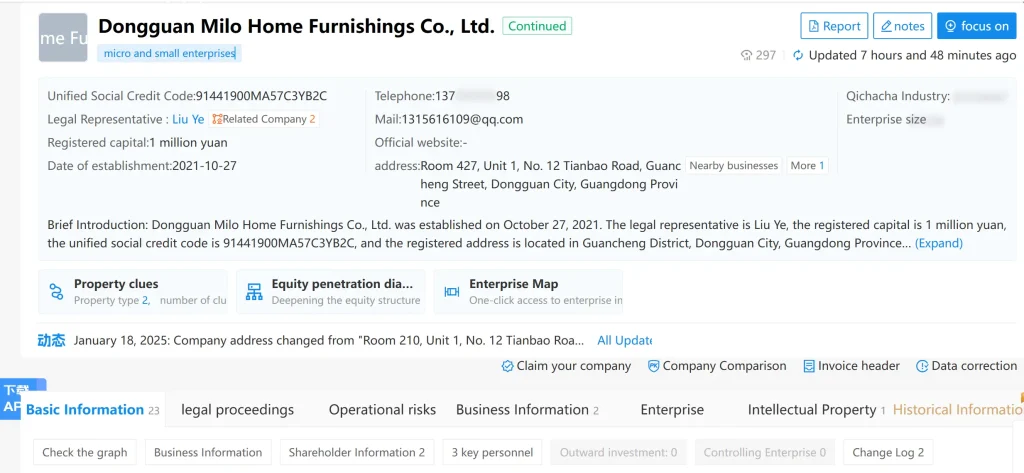
It’s crucial to conduct thorough due diligence on any potential sourcing agent before committing to a partnership. Relying on their word alone is a recipe for disaster. An unscrupulous agent can not only defraud you of your funds but can also jeopardize your entire production schedule and cause critical delivery delays.
How to Avoid This:
- Verify Their Business License: Ask the agent to provide their company’s official business license. A legitimate agent will readily share this document, and you can verify its authenticity through official Chinese government portals to confirm their registration details.
- Check Client Reviews and Case Studies: Look for reviews and feedback from past clients to gauge their service quality and reliability. Additionally, ask the agent to provide case studies that are relevant to your specific industry.
- Conduct an In-depth Interview: Test the agent’s expertise by asking detailed, professional questions about your product and their sourcing processes. A trustworthy partner will analyze your needs carefully instead of just giving a simple “yes” to every question.
- Ask for References: Request contact information from a few of their past or current clients. A confident agent with a strong track record should have no problem providing references you can speak with directly.
3.The Importance of Geographical Location
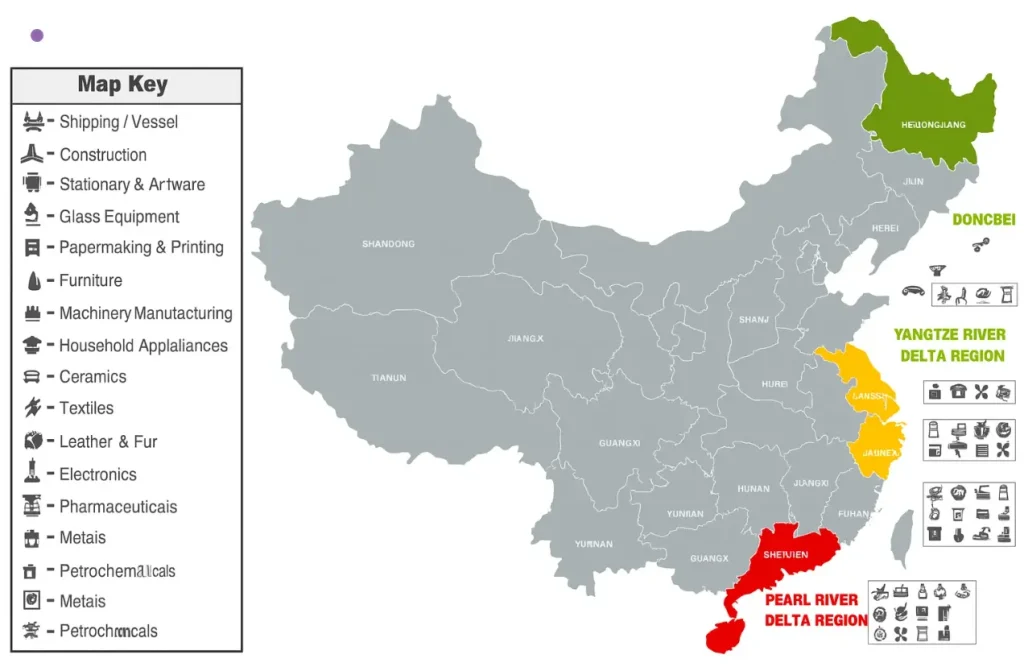
China is a vast country, and different industries are often concentrated in specific geographical clusters. For example, electronics are heavily centered in Shenzhen, while textiles are prominent in provinces like Zhejiang and Jiangsu. It is critical to choose a sourcing agent who is located close to the industrial hub for your specific product category.
An agent’s physical location directly impacts their efficiency and cost when it comes to conducting factory audits, managing production follow-ups, and performing quality inspections. If your agent is far from the factory, they may be unable or unwilling to make frequent on-site visits, which dramatically increases the risk of quality issues or delays going unnoticed.
How to Avoid This:
- Research Industrial Clusters: Before you begin your search for an agent, first research the primary manufacturing regions for your product within China.
- Inquire About Their Geographic Focus: When speaking with potential agents, ask them about their main areas of operation and whether they have an office or a dedicated team in your target industrial cluster.
- Prioritize a Local Expert: An agent who is deeply embedded in a specific region will almost always have a stronger local supplier network and more extensive, hands-on industry knowledge.
4.Considering the Total Cost of Sourcing
When evaluating the cost of a sourcing agent, you must look beyond their quoted service rate. The critical metric to assess is the “total sourcing cost,” which includes the product price, the agent’s commission, shipping fees, customs duties, and any potential extra costs that can arise from poor communication or quality problems.
How to Avoid This:
- Request a Clear and Itemized Fee Structure: A reliable agent will provide a written fee schedule that transparently lists all charges, such as their service commission, quality inspection fees, and shipping management costs. This ensures there are no hidden fees down the line.
- Understand the Different Payment Models: Sourcing agents operate on various fee structures, including a commission based on total order value, a flat service fee, an hourly rate, or a monthly retainer. Understand these models and select the one that best aligns with your business needs and order volume.
- Weigh Cost Against Value: Stop viewing the agent’s fee as an expense and start seeing it as an investment in your business. A great agent mitigates risk, saves you invaluable time, and prevents costly mistakes—providing a return on investment that far exceeds their commission.
5.Defining Clear Quality Liability in the Contract
If you sign an ambiguous agreement, you are setting yourself up for a frustrating battle when quality issues arise. Without clearly assigned responsibilities in the contract, you will inevitably get caught in a blame game between your agent and the factory.
How to Avoid This:
- Insist on a Detailed Service Agreement: At the core of this agreement must be a meticulously detailed Statement of Work (SOW). This document must explicitly define the agent’s responsibilities for quality control, including:
- Quality Standards: Specify exactly which quality standards will be enforced (e.g., AQL levels).
- Inspection Process: Define the timing (e.g., during-production and pre-shipment inspections) and the specific procedures for each inspection stage.
- Liability and Resolution: State clearly how liability will be assigned if defective or non-compliant products are discovered, and outline the required remedies (e.g., rework, refunds, or financial compensation).
- Formalize the Sample Approval Process: The contract must stipulate that bulk production will strictly adhere to the approved pre-production sample. Crucially, it should state that any deviation or modification requires prior written consent from you.
6. Requiring an IP Protection Agreement with Your Sourcing Agent and Supplier
If you have products with original designs or branding, intellectual property (IP) protection is paramount. Many importers fall into the trap of believing that a standard Non-Disclosure Agreement (Click to download NDA) with their supplier is sufficient. However, in China’s complex business landscape, you need far more robust legal instruments to protect your designs and concepts from being copied or misused.
How to Avoid This:
- Register Your IP in China First: The foundational step in protecting your IP is to register it in China. China operates on a “first-to-file” principle, which means whoever registers a trademark or patent first owns the rights to it in that country, regardless of who created it.
- Implement an NNN Agreement: It is strongly recommended to use an “NNN” (Non-Disclosure, Non-Use, Non-Circumvention) Agreement, which is specifically designed for the Chinese legal environment. This agreement must be written in Chinese and be governed by Chinese law to be enforceable. It explicitly:
- Prohibits the supplier from using your IP for any other purpose (Non-Use).
- Forbids them from selling your product to anyone else (Non-Disclosure).
- Prevents them from bypassing you to contact your clients directly (Non-Circumvention).
- Ensure Both Agent and Factory Sign: It’s not just the factory that needs to be bound by these terms. Your sourcing agent, as a party with full access to your business secrets and product details, must also sign the relevant confidentiality and IP protection agreements.
Conclusion
The six critical issues this article has uncovered all stem from one fundamental mistake: treating a sourcing agent as a simple cost to be minimized, rather than a crucial strategic investment.
The value of a true professional partner goes far beyond merely finding suppliers and relaying messages. They are your eyes and ears on the factory floor, the steadfast guardians of your quality standards, and your primary shield against the cultural and commercial risks of doing business overseas.


